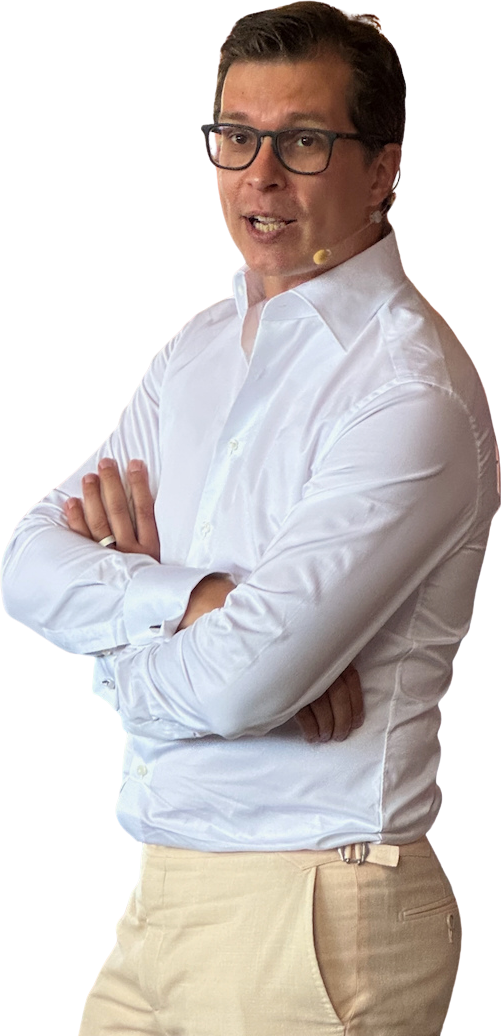
 Polle de Maagt
  Polle de Maagt
I start most meetings with a customer story. Not a persona, not a dashboard: one real person and what happened to them. It takes five minutes and it does two things.
Why it works.
A meeting never comes in isolation. It is part of someone's day. People rush in from another meeting, still half in their mail, already thinking about the next one, carrying whatever happened at home or at work. Anything that gets everyone on the same page first makes the rest of the meeting better.
Customer centricity: a lot of ads, few acts. Many companies say they are customer centric. But customers, their stories and their data rarely show up in the daily practice. And customers are real people too. A customer story is a small act: every meeting starts with the customer in the room.
a small act
Where the stories come from.
I hoard customer stories. Best practices and worst practices, my own experiences and the ones clients tell me. A few of them are on this site, like Netflix cancelling members who stopped watching and The Jane's 'Did you know' list. The best ones are small, specific and a little surprising.
How to run it.
To describe tools and exercises, I borrow the five structural elements from Liberating Structures. It is an easy and structured way to describe the different dimensions of an exercise.


Invitation.
Simple to understand, but weave three things into your invitation:
- The purpose. Everyone on the same page, instead of in the previous or the next meeting, and the customer in the room.
- The format. A free story, or one that answers a question: What can we learn from this? What made this moment special? How do we make this daily practice? What is the one thing you would fix?
- The time. How long each story can take. Then keep to it.
You will end up with one of three versions: you tell one story yourself, you ask one person to tell theirs, or you ask several people.
How space is arranged and materials needed.
Nothing to arrange and nothing to bring. It works at a conference table, in a stand-up and in an all-hands. Only make sure everyone can see the person telling the story.
How participation is distributed.
The host makes sure participation is spread: by telling a story, or by picking the storytellers. Storytellers share freely or answer the question you gave them. It is usually only the start of a meeting, so keep time.
How groups are configured.
No special configuration. One group, everyone facing the storyteller.
Sequence of steps and time allocation.
- Explain the purpose. One sentence is enough.
- Tell or invite. Share a story yourself, or invite one or more people to share theirs.
- Discuss. Take-outs and questions, together.
- Sum up. The one insight from the story or stories.
- Move on. To the first point on the agenda.
Tell people beforehand that the next meeting starts with a customer story, or give it as homework. The stories get better, and more people want to tell one.
Another five-minute opener: The secret ice cream.