 Polle de Maagt
  Polle de Maagt


I've run this for years, changed it more than once, and this page is both the how and the running log of what I've learned. What I do during these Quarterly Reviews? It's really a mixed bag and it has evolved over the years (more on that later), more recently with the explosive rise of AI.
I have mapped all my favorite workshop structures and exercises on a hotel terrace in Tel Aviv. I sketched out my new life on Malta, right after my ex told me she wanted to end things. I wrote the trends and the trend approach in Dubrovnik. I switched from ChatGPT to Claude in Johannesburg. Some of my most-used strategy slides got built in Tallinn.
Working on, not working in.
The shorthand for this is working ON your product/company/project/life, not working IN it. True, but the phrase gets repeated so often in strategy circles that it's turning into a platitude. Saying it doesn't make it happen. The trip does, or it doesn't.
Who this is for.
What follows is my own practice: personal projects, plus the corporate projects I'm deeply involved in. The concept works just as well for a relationship, a team or a department.
One honest caveat: doing this for a full week is much easier when you control your own calendar. If you don't, the mechanism still works scaled down, a protected long weekend, or even a single day with your phone in another room. Start there and grow it.
Choosing a location.
this list is mine, yours will differ
I pick remote locations on purpose, Dubrovnik, Dubai, Abu Dhabi, Marrakech, Bali, the Faroe Islands, Seville, Sicily, and it took years of trial and error to land on what to look for:
- Remoteness over temperature. Fewer reasons to leave the room, fewer people I know nearby. Some say you need physical distance, to create distance to truly oversee and reflect.
- Nature to run in. A workout is what resets my head between two deep-work blocks.
- A country I haven't visited before. So the week doesn't blur into the last one.
- Easy to reach, without losing a day to transfers. Travel time eats into the work I came for.
- Bonus: somewhere that also earns flight status. Small, but real.
- Where I sleep varies more than you'd think. Sometimes a hotel from a chain I know well, not having to think about the room frees up energy for the actual work. Sometimes the opposite: a bare, isolated cabin with nothing hotel-shaped in it to distract me. Once, a friend's house on the Sicilian coast, which cost nothing but the flight. The point isn't the price tag, it's removing friction, whichever way does that cheapest for you.
This list is mine. Yours will look different. The only way to find it is to try a few places and check afterwards what actually helped, not what just looked good beforehand.
Five structural elements.
Discipline is what makes a remote quarterly review work. Discipline to take real time away from office and home. Discipline to block large stretches of deep work, and to reschedule meetings rather than let them creep in. Discipline to stick to the plan.
How to read the instructions.
To bring some structure to tools and exercises, I borrowed the "five structural elements" from Liberating Structures. It is an easy and structured way to describe the different dimensions of an exercise.


Invitation.
The prospect of uninterrupted deep work is usually enough to get me in the right headspace. A good location makes it stronger: the week becomes a reward, and the reward comes with an unspoken deal, I get to enjoy this place, so I earn it by working hard. Good food and exercise sharpen the focus further.
How space is arranged and materials needed.
- Large wall or mirror for post-its. I use the mirror in my room for two things: writing down the week's goals, and mapping out how the days get filled.
- Post-its and a pen.
How participation is distributed.
The purpose is maximum focus time, so involving others stays limited. Running this with a group or team? Pull tools from the toolbox to build engagement across the different phases.
How groups are configured.
Usually just me. Lately I've started bringing my partner along. She has her own work and her own rhythm during the day; we meet for lunch, dinner and the evening. It works well: the deep-work blocks stay protected, and the trip stops being only about output.
Sequence of steps and time allocation.
- Before the trip: a running list of bigger todos and projects, kept in Notion, plus a set of reflection questions I keep and pick from rather than invent on the spot. I also give the quarterly a theme, finance, personal development, growing the team, so the days get a clear focus instead of a grab bag (also see later on what AI changed).
- On the way there, or the first night, a full brain dump of everything on my mind for the week. Ecocycle planning and hot air balloon are two exercises I use to get it all out.
- Post-its on the mirror or wall, then prioritise.
- A simple day plan: morning routine, two work blocks, lunch, an afternoon block, dinner, evening routine. I build in time for good food and exercise, evening runs and dinner after in Bali, yoga in the morning elsewhere, and I use the week to add new habits, like a new morning exercise routine. A quarterly is a good moment for that.
- Then the actual appointments: the odd call I can't avoid, maybe one meeting on location, time to explore the surroundings. In Dubrovnik that was a morning in the old town, a well-earned break. Protecting uninterrupted deep-work blocks comes first.
- Everything goes into the week plan, key activities first.
- And then it's execution. Every evening I quickly review what got done. Every morning at breakfast I run through the day ahead.
What AI changed.
The five elements above describe the tool. This is what's different about doing it in 2026.
A chunk of the manual work is gone. Notion used to need a hard scrub before I could trust it as input; now that happens continuously, not during the trip. Part of the analysis runs itself: Key Results update as data comes in, instead of me tallying them by hand on day one. Prioritisation is assisted too: Claude already helps me decide which review to do when, and does a first pass on those reflection questions before I sit down with them.
The bigger shift: a chunk of the actual work is already done before I arrive. Trend selection, workshop write-ups, backlog items, the stuff that used to eat the first two days of "catching up", now gets handled beforehand. What's left is the part that was always the point: thinking, not processing. This is also where "working on, not working in" stops being a slogan.
AI has taken over more of the working-in. What's left really is the working-on.
Two things I haven't figured out yet. Whether the trip itself is getting shorter, or just deeper, now that the catching-up has disappeared. And whether this changes what I offer clients directly: an AI-assisted version of this rhythm, or whether it stays something I do for myself. Both open questions, not answers.
Additional tips and pointers.
learned the hard way
- Learned: three beats four. I used to plan four quarterlies a year, once a season. In practice it's two or three: some quarters get skipped on purpose, others fold into the next one. That's not failure, that's what I learned actually works. What matters is doing it often enough to keep adjusting course, not hitting a number.
- Piggyback where you can. My deepest, yearly review doesn't need its own trip if a family holiday already lines up with quiet season. Folding it into travel you're doing anyway saves a trip, and the change of scenery still does its job.
- Time it against clients' calendars, not just mine. The quiet weeks on my side are only half the equation. The best weeks are quiet on the client side too: summer when they're on holiday, outside conference season, never in May, by far my busiest month. March works well too: quieter, and usually a chance at good weather while home is still cold.
- Protect the week for real, or don't bother. Two quarterlies over the years didn't land: once because life needed me more than the trip did, once because client deadlines followed me there anyway. Neither was a scheduling problem, both were a boundary problem. In practice: block the calendar weeks out, not days out. Explain the concept openly to clients and colleagues beforehand, most people recognise the need for deep work and respect it, and that openness is what actually cuts down interruptions during the week. Then accept in advance that a few things won't happen while you're gone; deciding that ahead of time is easier than deciding it mid-week.
Background.
How this started, for anyone curious.
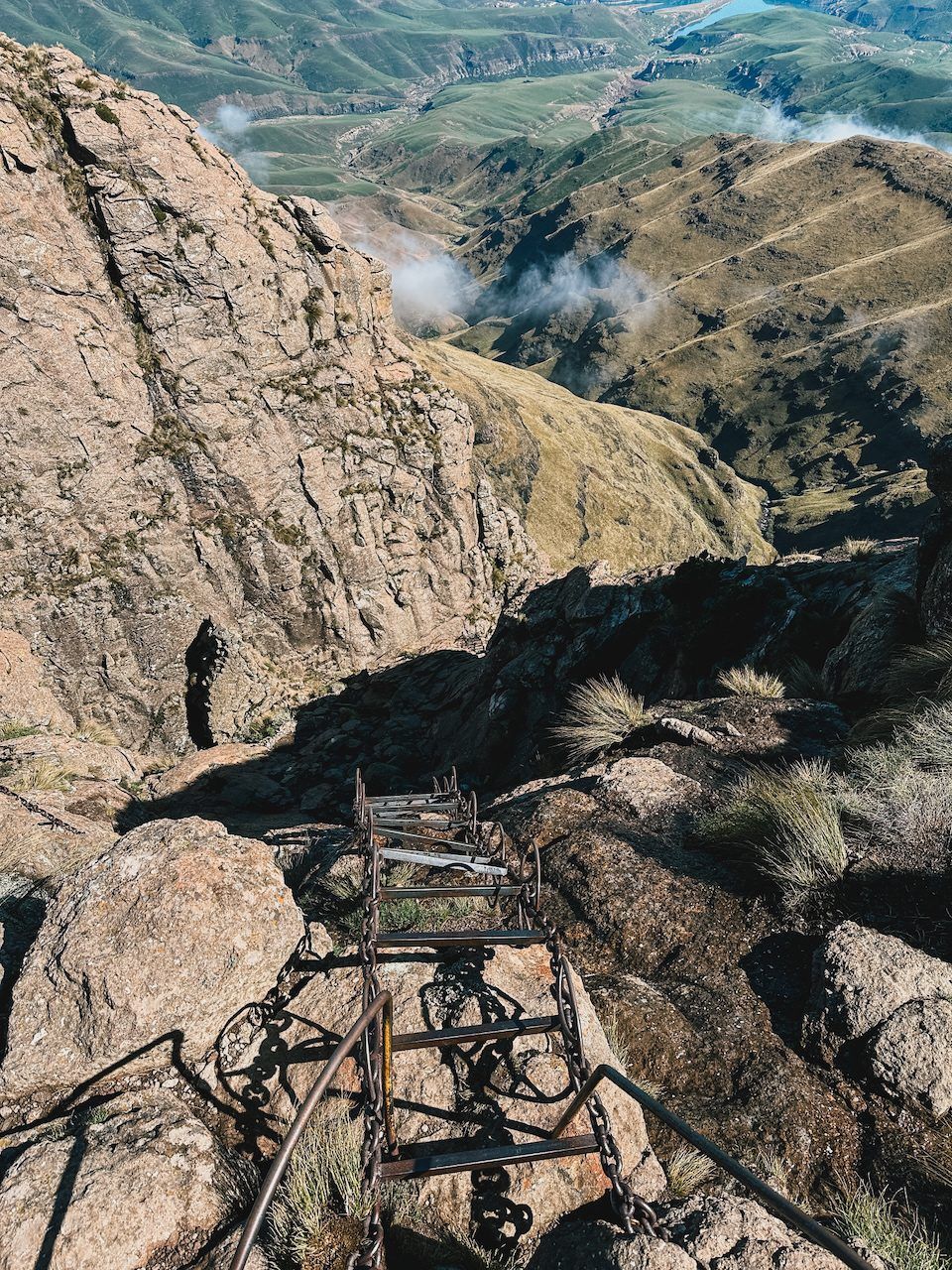
The first time I truly felt the power of carving out dedicated time for reflection, was in January 2014 in Hong Kong, when I was hiking Lantau Island. I had forgotten to arrange my China visa in time and was stuck in Hong Kong longer than I had anticipated. With ample time, I explored the area and started reflecting when hiking. What I wanted that year. What I wanted in five years. What I wanted out of my relationship. What I needed out of my holidays. It was the starting point of a period of ad hoc reviews, whenever I had the time (and it was the start of my hiking holidays, but that is another story).
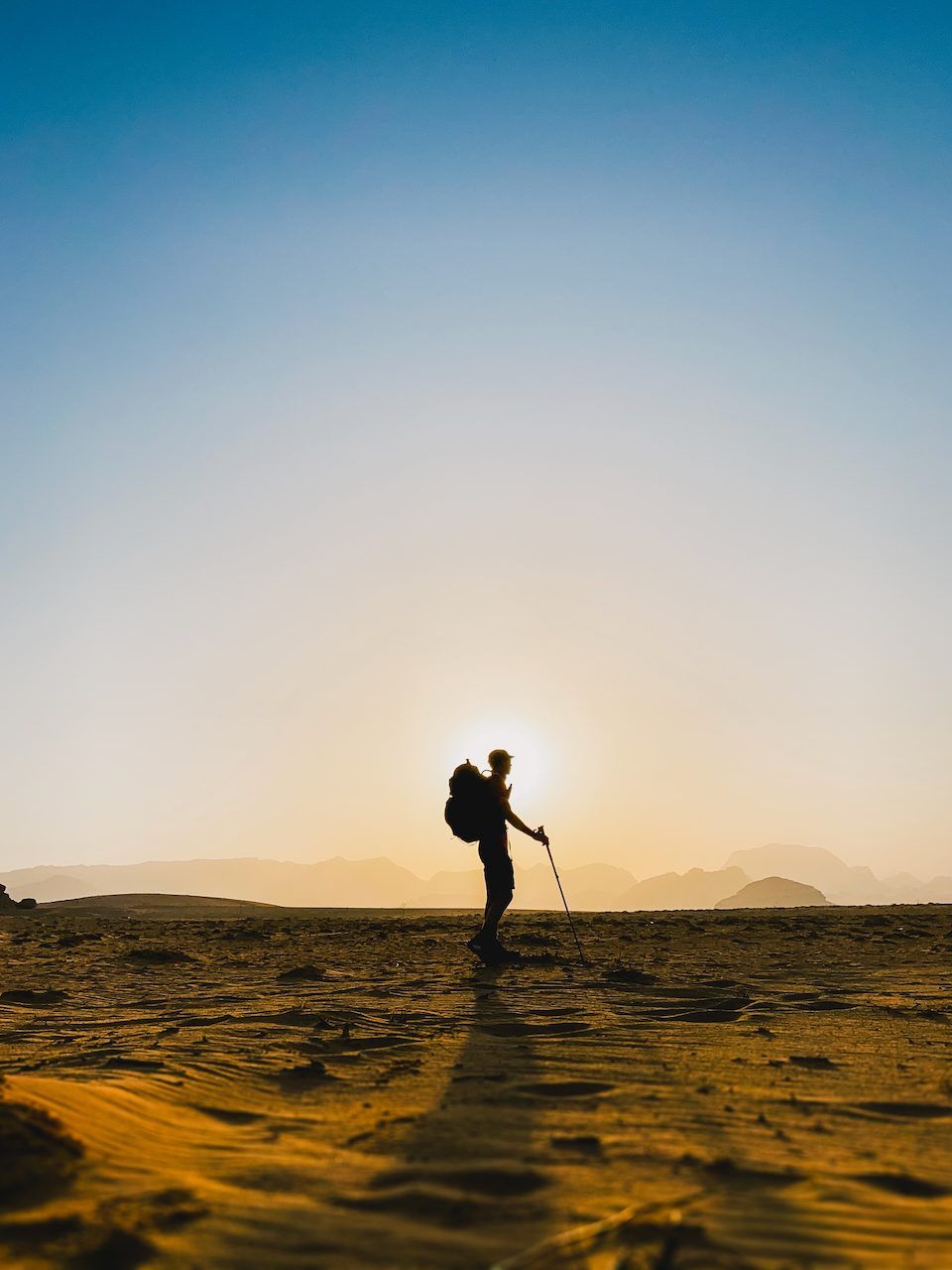
The first real documented Quarterly Review I did was in Aqaba, Jordan on 7 November 2018. I had just finished a part of the Jordan Trail, and found myself on the beach in a reflective mode. I read books, made notes, created plans and actions for the next periods of time. And I planned my next Quarterly, because it felt such a valuable and useful use of my time.
From that moment on, the quarterlies took me to (just to name a few) Dubrovnik, Bali, Malta, the Faroe Islands, Tel Aviv, Seoul and Sokcho, Antwerp, Tallinn, Muscat, Dublin, Panama City, Taipei, Cape Town, Dubai, Abu Dhabi, Marrakech, Bergen, Seville, Johannesburg and Sicily.