 Polle de Maagt
  Polle de Maagt
A brand logo tattooed on someone’s skin is another.
When I met Nike’s Ekins, the tattoos caught my attention. But the people behind them were the more interesting story.
Story.
Nike’s Ekins are people whose job is to bring the brand’s stories and sports technology to life. “Ekin” is “Nike” spelled backwards.
During projects for Nike at my former agency Boondoggle, I spent time with Nike employees and met several Ekins. Many of them at the pop-up Nike Run House we did by the Vondelpark in Amsterdam, for a Nike campaign.
Nike was easy to admire from the outside: the campaigns, the athletes, the products. Inside, I found something worth paying just as much attention to: a company full of stories, traditions and people who carried them.
The Ekins stood out. Their role brought together the brand’s history, its sports technology and the people who used it. Some expressed that connection through tattoos.
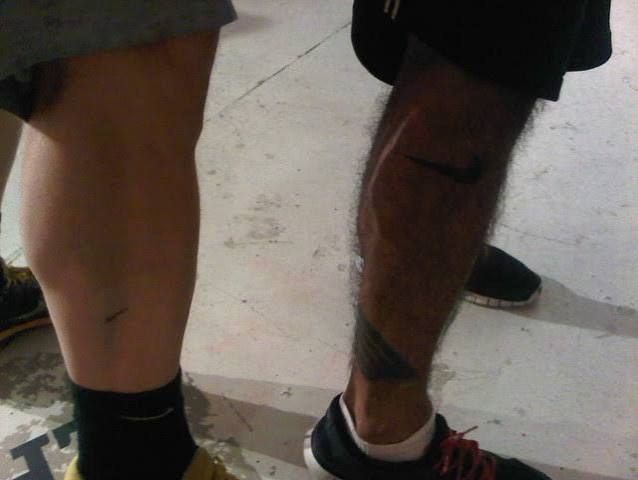
One of the people I met was a New York-based Ekin, Bruno Garcia. He had a reversed Nike logo tattoo and the victory wings of the Greek goddess Nike on his calves.
He was also active in the Hash House Harriers, a running community famously described as “a drinking club with a running problem”.
That detail mattered to me more than the size of the network. Here was someone whose connection to running extended beyond his job description. The story was not simply that he could talk about Nike. Sport was part of his life.
What they did.
Nike gave storytelling a role inside the company, rather than leaving it entirely to advertising.
Ekins combined product knowledge with the stories behind the brand. They could help people understand not just what a product was, but where it came from and what it was for.
In the people I met, that knowledge sat alongside a personal connection to sport. The stories had someone to tell them who cared about the subject.
The tattoos were the memorable detail. The role and the people were the mechanism.
Why it matters.
The tattoo is not the culture. It is a visible expression of it.
Or at least, that is what made it interesting in these encounters. A tattoo on its own proves neither a healthy culture nor good employment practices.
What I admired was the combination: knowledge, stories and participation in the world the brand served.
There is a difference between asking employees to repeat a brand message and giving people the knowledge and room to represent it credibly.
A campaign can tell you that a company cares about sport. Meeting someone who knows the products, knows the stories and runs in their own time makes that claim tangible. That does not make advertising unnecessary. It gives the advertising something real to stand on.
Try it yourself.
Please do not ask your team to get the company logo tattooed. Ask a less spectacular question:
What do people in your organisation know, do and pass on, not because it is in the brand guidelines, but because it matters to them?
Find the people who already care deeply about the work and the people you serve. Give them access to product knowledge, the stories behind decisions and opportunities to share what they know.
Do not turn their enthusiasm into a compulsory performance of loyalty. Make it easier for them to contribute in their own voice.
Ask someone close to your product or service to share one story that helps a colleague understand why it is the way it is. Start with knowledge worth passing on, not a slogan worth memorising.
The part worth copying is not what people put on their skin. It is what they know, care about and bring to life.
Based on my original post, first published 14 November 2010, and rewritten in October 2026. The encounters are historical; this piece does not describe Nike’s current practices. Photo: my own, 2010. Related: Acts, not ads.