 Polle de Maagt
  Polle de Maagt
Story.
Colruyt is a no-frills supermarket chain in Belgium that takes pride in being responsible about costs. Its argument is that lower company costs mean lower overheads, allowing it to offer products at lower prices than competitors.
In my 2012 observations, Colruyt was not only good at putting that into practice; it also communicated it through simple stories customers could remember and share. One example was the coin lock on the shopping cart. Or rather, its absence.
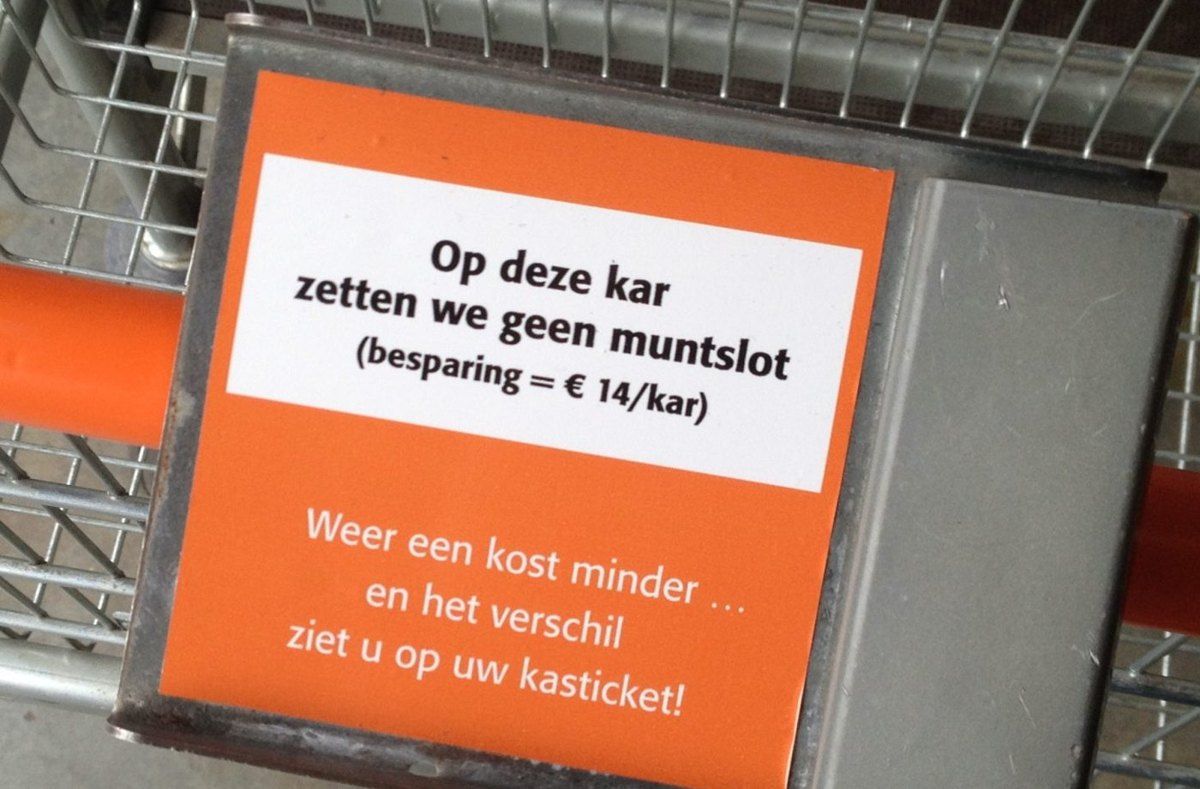
We don’t have a coin lock on this shopping cart, which helps us save €14 per cart.
What they did.
Less cost, with the promise that you would notice the difference on your shopping receipt.
The premise is easy to understand: removing the coin locks saves money. That money can be used to lower prices. Customers benefit from those lower prices.
Why it works.
How much difference saving €14 makes to everyday prices is debatable. In the original post, I put the typical price of a shopping cart at €75 to €150 and suggested that removing the lock would probably increase the number of lost carts a little. So the net savings might not be substantial, especially over a longer period.
But it is a story that is very easy to understand and share. What makes the case useful is the connection between a visible operational choice and the brand’s promise.
Try it yourself.
Look for a cost you cut that customers can see. Then tell them, at the spot where they notice it, what they get back for it.
Pick one saving your organisation made this year. Can a customer see it? If not, find the one place where it could be explained in a single sentence.
A note from 2026.
The €14 is the claim reported in the 2012 article. The cart-price range and possible effect on lost carts were part of the original commentary, not a verified present-day cost model. This archive version does not establish net savings or a measurable reduction in customer prices.
Acts, not ads explores the broader shift from what a company says to what it does. This cart example remains a standalone case.
Original: Best practice: Colruyt helps you save by saving on shopping carts, 20 March 2012. Title and wording edited; the archive note and 2026 reflection are separate additions. Photo: my own, from the 2012 post.